Body Positivity
Why We’re Obsessed With Chloe Melton’s TEDx Talk on the Hidden History of BMI
Read more

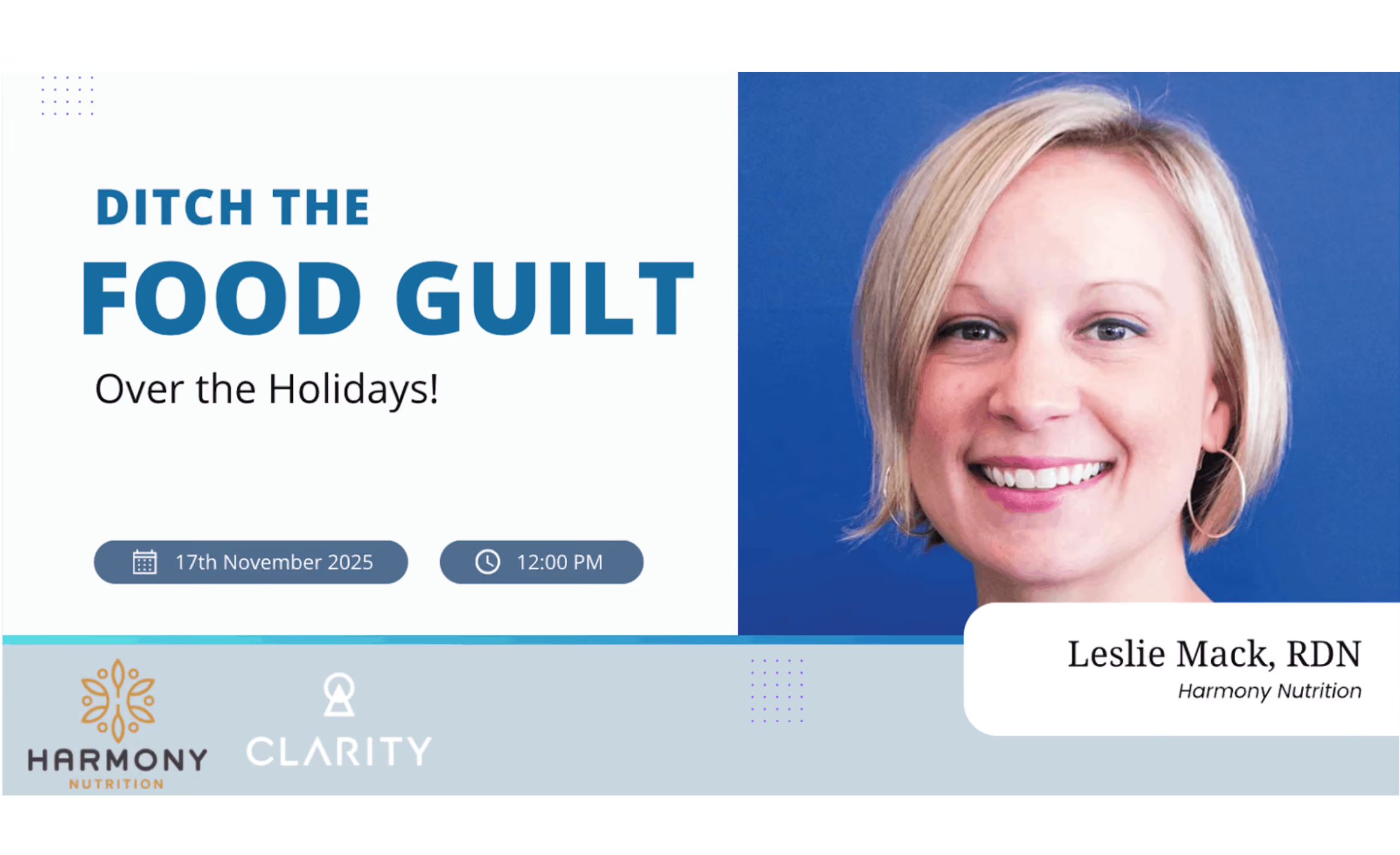
Clarity Fitness — Georgia’s first body-positive and eating disorder–informed gym — recently hosted a powerful webinar on a topic that so many people quietly struggle with: food guilt. And not just holiday food guilt, but the everyday pressure, shame, and second-guessing that can shape our relationship with food long before November rolls around.
The conversation featured dietitian Leslie Mack from Harmony Nutrition and was kicked off by Clarity’s general manager, Mimi, who welcomed attendees from near and far. Even with folks chiming in from New York, the message felt universal: you deserve to enjoy food, connect with your body, and navigate the holidays without carrying guilt around your plate.
Leslie opened by naming something so many people have felt but rarely say out loud: food guilt doesn't come from nowhere. It’s often shaped by years of messaging about “good” foods, “bad” foods, and the idea that our worth or wellness depends on controlling what we eat.
She walked through some of the most common sources of food guilt:
Naming these roots helps people understand that guilt isn't intuition — it’s conditioning.
“What do you actually gain from food guilt?”
Not in a sarcastic way, but in a curious, compassionate way. Because when most people really look at it, guilt only creates chaos in their eating patterns — not clarity, not balance, not peace.
She shared how guilt often leads to restrictive rules that later turn into feeling out of control around the exact same foods we tried to avoid. One of the most relatable patterns she sees in her clients:
Restrict → feel deprived → overeat when exposed to the food → feel guilty → restrict again.
It’s not a lack of willpower. It’s a predictable cycle that guilt feeds.
Leslie explained that guilt isn’t just emotional — it impacts real physical experiences. When people cycle between restricting and over-consuming, it can lead to:
She emphasized this isn’t a moral failure. It’s a human response to scarcity and shame.
This part of the webinar felt like the heart of the message. Leslie offered concrete strategies anyone can use, especially during holidays where food is everywhere and expectations run high.
Instead of seeing food as moral, Leslie encouraged shifting toward a mindset of all foods can fit.
Yes, some foods are more nutrient-dense than others — that’s true. But emotional, cultural, and joyful foods matter too. Health is about the full picture.
Instead of “I shouldn’t be eating this,” try asking:
This promotes presence instead of policing.
When we catch thoughts like “clean,” “earn your food,” “work it off,” or “be good tomorrow,” Leslie suggests labeling them for what they are — diet culture — not truth.
Creating that little bit of separation opens the door to choice.
Hunger is not a problem. Cravings are not a problem.
Suppressing hunger often backfires. Leslie encouraged recognizing early hunger cues rather than waiting until you’re ravenous, because extreme hunger makes intentional food choices nearly impossible.
One of the most helpful tools Leslie shared was the 1–10 hunger/fullness scale. The goal isn't to micromanage, but to gain awareness.
Most people feel their best when they eat in the “early hunger” range and stop around the “comfortably full” range — not stuffed, not starving. When people skip meals or push hunger down, they tend to swing hard in the other direction later.
More consistency, she noted, leads to:
Leslie explained that balanced meals don’t need to be complicated. It helps to include:
But if that doesn’t happen at every meal? You’re still doing just fine. Progress, not perfection, is what supports sustainable nourishment.
One practical tip she offered:
Try including a “fun food” with a meal instead of saving it for the end of the day.
This simple shift can dramatically reduce feelings of being “out of control” around that food.
The holidays can bring up old diet rules, family pressure, and the belief that we need to “fix” what we eat. Leslie’s message was clear:
You don’t need to earn food.
You don’t need to make up for food.
And you don’t need to feel guilty for enjoying food.
Your body is not made better or worse by holiday meals. Your worth is unchanged. And food is meant to be enjoyed — with comfort, connection, and care.
As Decatur’s first eating-disorder-informed gym now in the heart of Decatur Georgia and soon to be opening in Inman Park, Clarity Fitness remains committed to offering education, events, training, and classes that prioritize:
Workshops like this one highlight the simple truth at the core of Clarity’s mission:
Food should be a source of nourishment and joy, not fear, guilt, or shame.
And every body deserves a space to move and breathe without pressure to change.
.avif)