Body Positivity
Strength Over Shrinking: What Recovery Taught Me About Movement
Read more
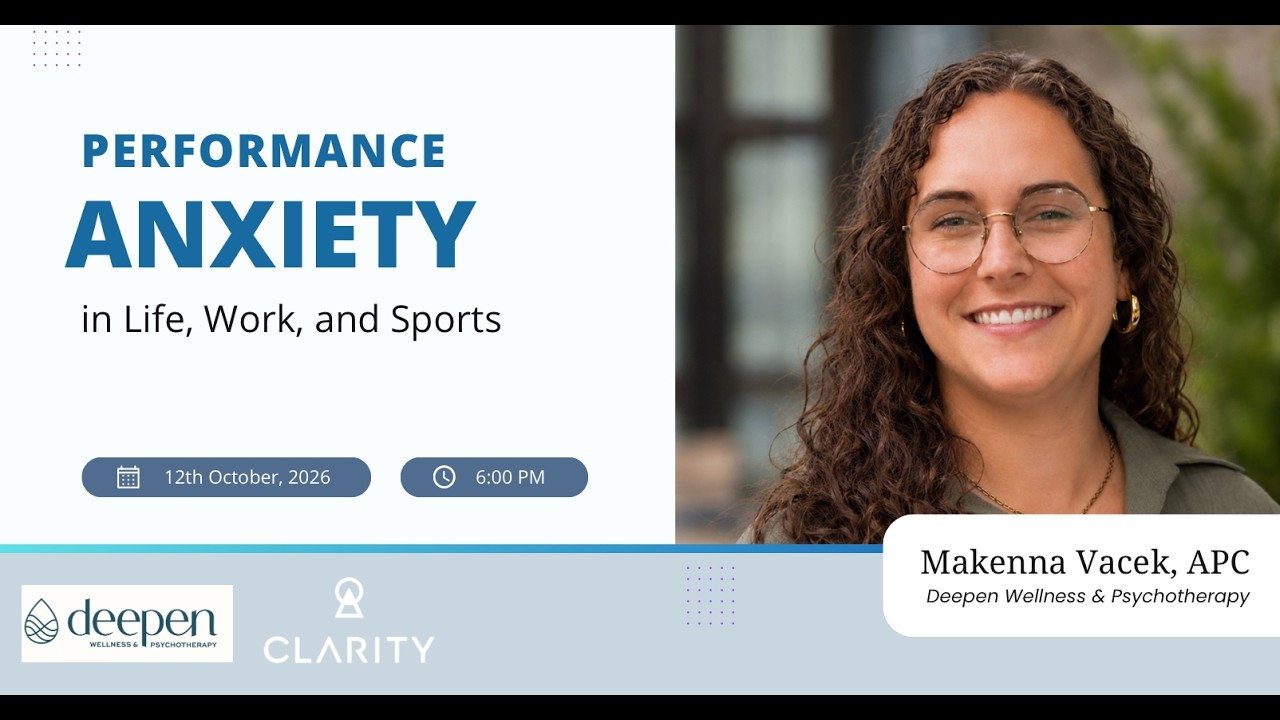
Performance anxiety is the rush of nerves, racing thoughts and physical stress that shows up right before, during or after a moment that matters. Think a big presentation, a championship game, or walking into a new gym for the very first time. It is incredibly common, and the good news is that there are real, practical tools that help.
That is exactly why I, Abbey Griffith, Clarity Fitness Owner & Founder, teamed up with Makenna Vacek, APC, from Deepen Wellness for our webinar, “When Anxiety Strikes: Performance Anxiety in Life, Work and Sports”. Makenna has a background in athletic training, sports medicine and exercise science, and went back to school for counseling. She now supports college athletes, performers, executives and folks in high stress jobs. I came at it from the movement side as a certified personal trainer and the owner of Clarity Fitness, Georgia's first weight inclusive, fat positive fitness concept, with studios in Decatur and Inman Park.
"We both have a passion for sport, movement, mental health and advocating for our clients and our community."
Abbey Griffith, NASM CPT, Owner and Founder of Clarity Fitness
Here are our biggest takeaways, so you can feel a little more grounded the next time your heart starts pounding.
Performance anxiety is intense emotional distress, like fear of failure or fear of being judged, that happens before, during or after a situation where you are performing in front of others. It can also show up when you are simply imagining how other people will view your performance.
In sports, it often looks like choking: you know you have the skill, but in the moment you just can't reach your usual level.
The main difference is the trigger. Generalized anxiety tends to float around everything at once, while performance anxiety is tied to one specific event or task.
"Generalized anxiety is typically around anything, everything. I don't know why I'm anxious. And performance anxiety can be very specifically based around an event, a specific thing you're trying to do."
Makenna Vacek, APC, Mental Health Counselor at Deepen Wellness
If you wake up anxious and can't name why, that leans general. If your stomach flips every time you picture Thursday's pitch meeting, that is performance anxiety talking.
Performance anxiety shows up differently for everyone, and all of these are normal signs of your nervous system getting revved up:
That last group is where a lot of the real work happens, because thoughts are something we can practice shifting.
Not sure how anxiety shows up for you? Makenna suggests noticing how you spot it in someone else, like a nervous speaker or a player at the free throw line. That outside view can make you curious about your own patterns, without any judgment.
Yes. A little stress helps you focus and perform your best, while too much tips you into overwhelm. Psychologists have described this sweet spot for more than a century, often called the Yerkes Dodson curve.
"If it's like LeBron James playing pickup with a bunch of preschoolers, he's actually going to perform worse to his standard because it's going to be boring. You need a little bit of stress."
Makenna Vacek, APC, Mental Health Counselor at Deepen Wellness
The flip side? Makenna gave the example of if she played pickup with LeBron, the demand would be way too high, and that is when panic and burnout creep in. The goal is the middle zone, where you feel engaged, motivated and not threatened.
Your window of tolerance is how much stress you can handle on a given day while still feeling like yourself. The idea comes from psychiatrist Dr. Dan Siegel, and it is such a helpful way to understand why some days feel harder than others.
When you are well rested and fueled, your window is wide and everyday ups and downs feel manageable. When you skipped sleep, didn't eat enough, or have something heavy going on, your window shrinks. Suddenly small things feel huge, and you might find yourself crying at the end of the day without knowing why.
"Sometimes being able to give yourself a little bit of grace around like, 'Oh, my window of tolerance is just smaller today because of these other factors'."
Makenna Vacek, APC, Mental Health Counselor at Deepen Wellness
If you have a big moment coming up later in the week, ask yourself: how can I widen my window before then? Sleep, food, and leaning on your people all count.
Both, and that is okay to admit. Movement is one of the best tools we have for easing stress, and the gym itself can also be a huge source of anxiety.
"Movement has tons of really amazing benefits on stressors and anxiety, and also sometimes the movement itself is the stressor."
Abbey Griffith, NASM CPT, Owner and Founder of Clarity Fitness
Different types of movement can support different needs. If your thoughts are running wild, a calming yoga flow might help settle your mind. If you need to work through something, lifting weights can give your brain a steady, focused task. Check in with yourself and choose what feels supportive today. That is intuitive movement in action.
In an informal social media poll I shared during the webinar, only 17% of people said they feel very comfortable in fitness spaces. That tells us two things. The fitness industry has a lot of room to grow, and if you feel uneasy walking into a gym or class, you are in the majority.
"It doesn't mean that you're wrong. It doesn't mean that you're doing something wrong. It doesn't mean that you're overreacting."
Abbey Griffith, NASM CPT, Owner and Founder of Clarity Fitness
And honestly? Even I get nervous. There is a beginners only soccer league near me that I keep wanting to try, but I haven't. Why? Nerves!
"I own two gyms. I do this all day every day and I'm nervous. So it is very normal. It is very human to need a little extra support, need a buddy, or to try something new."
Abbey Griffith, NASM CPT, Owner and Founder of Clarity Fitness
This simple question gets skipped way too often. Think back to rollerblading, dancing in your kitchen, a pickup game with friends, or a ropes course. Joyful movement is a real resource for your mental health, not just a bonus.
Pay attention to a studio's relationship with bodies and movement. If coaches and instructors only push performance at all costs, it is hard to keep a positive, playful relationship with exercise. Look for spaces that celebrate small wins, welcome every body, and care about how you feel, not just what you lift or weigh.
Words matter too. If a trainer or provider says something that doesn't sit right, you are allowed to challenge it, out loud or in your own mind. Tools like the "Please don't weigh me" cards from More Love can help you advocate for yourself at the gym or the doctor's office without needing to explain.
Most of us spend hours on the physical prep, like building the slides or running the drills, and almost no time on mental prep. Makenna sees this all the time with college athletes. Small daily habits build a wider window of tolerance, so you have tools ready when the big moment comes.
"If you fail, that doesn't mean you are a failure."
Makenna Vacek, APC, Mental Health Counselor at Deepen Wellness
Shifting your mindset is a lifelong practice, not a one time fix, and that is completely okay.
You did the prep and the nerves still showed up. That is normal! Here are three tools you can use right then and there.
You can't control how the audience reacts or whether someone yawns. You can control your effort, your preparation and how you show up.
Your brain is always talking, so start by getting curious about what it is saying. Then swap vague warnings for clear, positive cues. Skip words like don't, can't, shouldn't and won't, because telling yourself "don't mess up" puts the mess up front and center. Try "trust your training" or "you know this material" instead.
"Why don't we talk to ourselves a little bit more like we talk to a good friend?"
Makenna Vacek, APC, Mental Health Counselor at Deepen Wellness
Take a deep breath in, pause, then sip in a little more air at the top. Let it all out slowly through your mouth. Repeat once or twice.
Box breathing works well for some people, but others find it hard to focus on counting when they are already overwhelmed. The cyclic sigh is quick and simple. A 2023 Stanford study published in Cell Reports Medicine found that just five minutes a day of cyclic sighing improved mood and lowered anxiety, with stronger effects than mindfulness meditation.
"You can do that in 10 seconds before you walk on a stage. You can do that when you're standing on court trying to compete."
Makenna Vacek, APC, Mental Health Counselor at Deepen Wellness
Try the cyclic sigh: a deep inhale, a second short inhale at the top, then a long, slow exhale. Two rounds take about 10 seconds and can help your body relax.
Stage fright is one type of performance anxiety. Performance anxiety also covers sports, job interviews, exams, public speaking and even trying a new workout class.
Being watched can push your stress past your peak performance zone. Mental skills like visualization and productive self talk help bring you back to the middle.
Yes. Most people do not feel fully comfortable in fitness spaces. Choosing a weight inclusive, body positive gym and bringing a buddy can make a big difference.
Look for a Certified Mental Performance Consultant (CMPC) through the Association for Applied Sport Psychology directory, or search Psychology Today for counselors who treat anxiety.
Clarity Fitness offers weight inclusive, eating disorder informed group classes, personal training and open gym in Decatur and Inman Park, Georgia.
Performance anxiety is a sign that something matters to you. With a little practice, you can learn to work with your nerves instead of against them.
Want to feel the difference of moving in a space that truly welcomes you? Come try a class at Clarity Fitness in Decatur or Inman Park. Bring a buddy if you'd like. We'll be so happy to see you.
Watch the full webinar replay above, and follow along with us on Instagram at @claritydecatur.
Unlimited gym, classes, and events at both studios, plus a complimentary intro personal training session.